
Ask ten Muslims who the best Qur’an reciter in the world is — the best qāriʾ — and you may get ten answers. For some it is the voice they grew up hearing on the radio before Maghrib in Ramaḍān; for others it is the imam whose Fajr recitation from Makkah they listen to on the way to work. Every list like this one is partly a matter of taste.
But some voices keep coming back. Below are ten Quran reciters whose names appear on almost every such list — seven from the great Egyptian school of the twentieth century, and three imams of the great mosques of Makkah and Madinah. They are in order of birth, from the oldest to the youngest, with a short note on each and one recitation to hear.
وَرَتِّلِ الْقُرْآنَ تَرْتِيلًا
“And recite the Qur’an with measured, distinct recitation.”
Sūrat al-Muzzammil: 4
Beautifying the Qur’an with the voice is not a modern fashion. The Prophet ﷺ said:
«زَيِّنُوا الْقُرْآنَ بِأَصْوَاتِكُمْ»
“Adorn the Qur’an with your voices.”
Sunan Abī Dāwūd 1468, narrated by al-Barāʾ ibn ʿĀzib
And when he heard Abū Mūsā al-Ashʿarī reciting at night, he told him: “You have been given one of the flutes of the family of Dāwūd” — praise for a beautiful voice used for the Book of Allah (Ṣaḥīḥ al-Bukhārī 5048, Ṣaḥīḥ Muslim 793).
Two words you will meet below. Murattal is the steady, moderate-paced recitation used in prayer and for learning. Mujawwad is the slower, fuller style of the Egyptian masters, where each passage is recited with long breaths, pauses and repetition. Most of the great reciters recorded both.
The Egyptian masters
1Sheikh Muḥammad Rifʿat
الشيخ محمد رفعت
Blind from early childhood, he had memorised the Qur’an by the age of ten. In 1934 he became the first reciter ever heard on Egyptian radio, and for a generation his voice was what the Muslim world meant by Qur’an recitation. Egyptians still call him Qīthārat al-Samāʾ, “the harp of heaven”, and he is praised above all for fitting the tone of his voice to the meaning of each verse. Only a few of his radio recordings survived, so expect some hiss — it is worth it.
 Listen: Sūrat Ṭā-Hā, verses 83–98
2Sheikh Muṣṭafā Ismāʿīl
الشيخ مصطفى إسماعيل
Official reciter of the royal palace in King Farouk’s time, and to many specialists the most technically gifted of all the Egyptian reciters. He was known for the length of his breath and for the way he built a passage slowly, verse by verse, until the whole gathering was held in it. His live mosque recordings, some over an hour long, are still studied by reciters today.
 Listen: Sūrat al-Qaṣaṣ 51–79, Egyptian radio, 1956
3Sheikh Maḥmūd Khalīl al-Ḥuṣarī
الشيخ محمود خليل الحصري
If one reciter taught the world how the Qur’an should sound letter by letter, it was al-Ḥuṣarī. He was the first to record the complete Qur’an in murattal, and went on to record it in the readings of Warsh, Qālūn and al-Dūrī as well. He served as head of the reciters of Egypt. His tajwīd is so exact that teachers still use his recordings as the model for students — if you are learning to recite, start with him.
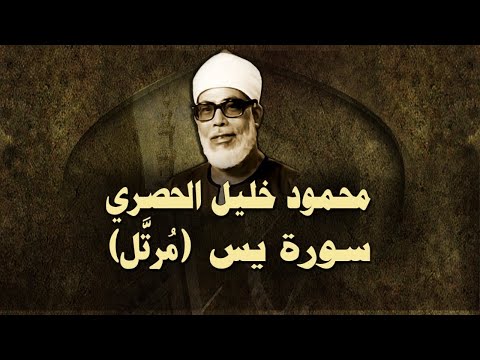 Listen: Sūrat Yā-Sīn, murattal
4Sheikh Muḥammad Ṣiddīq al-Minshāwī
الشيخ محمد صديق المنشاوي
Son of a reciter, from a family of reciters, al-Minshāwī had a voice so full of sorrow that he is often called “the weeping voice”. He recorded the whole Qur’an both mujawwad and murattal, and also a teaching recording in which children repeat after him verse by verse — still one of the best ways for a child to learn a sūrah. He died at forty-nine, yet his recordings have never stopped playing.
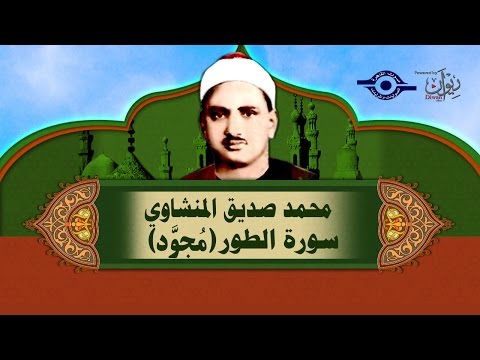 Listen: Sūrat al-Ṭūr, mujawwad
5Sheikh Kāmil Yūsuf al-Bahtīmī
الشيخ كامل يوسف البهتيمي
A reciter’s reciter. Al-Bahtīmī grew up listening to Sheikh Rifʿat and carried much of his gentleness into his own style, joining Egyptian radio in the early 1950s. His voice is soft and clear, and it rises without strain — many listeners who discover him late say he became their favourite. Like al-Minshāwī, he passed away young, in the same year.
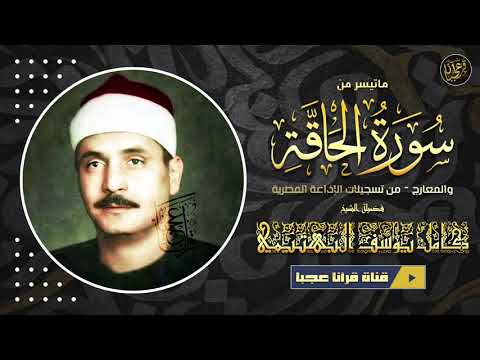 Listen: Sūrat al-Ḥāqqah and al-Maʿārij, Egyptian radio
6Sheikh Abū al-ʿAynayn Shuʿayshaʿ
الشيخ أبو العينين شعيشع
His early style was so close to Sheikh Rifʿat’s that listeners took him for Rifʿat’s heir. He recited across the Muslim world — his 1956 recitations in Baghdad are still treasured — and later led the syndicate of Egypt’s reciters. Of the Egyptian masters of the golden age he lived the longest, and he kept reciting into old age.
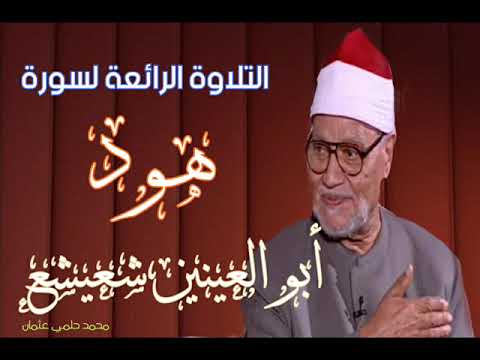 Listen: Sūrat Hūd
7Sheikh ʿAbd al-Bāsiṭ ʿAbd al-Ṣamad
الشيخ عبد الباسط عبد الصمد
Probably the most famous Qur’an reciter in history. He memorised the Qur’an by ten, joined Egyptian radio in 1951, and then carried his recitation to almost every corner of the world. His power, his range and his extraordinary breath made his mujawwad recordings the sound of the Qur’an for millions of people who do not speak Arabic. He was the first head of the syndicate of Egypt’s reciters.
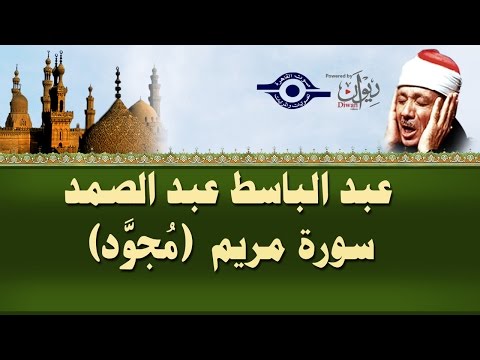 Listen: Sūrat Maryam, mujawwad
The imams of the two Ḥarams
8Sheikh Muḥammad Ayyūb
الشيخ محمد أيوب
He memorised the Qur’an as a boy in a Makkan mosque circle, then spent his life in Madinah as a scholar of tafsīr — he held a doctorate in it and taught at the Islamic University. But the world remembers him for Ramaḍān 1410 (1990), when he led Tarāwīḥ in the Prophet’s Mosque: those recordings, measured, clear and full of khushūʿ, are still played in homes and cars across the Muslim world.
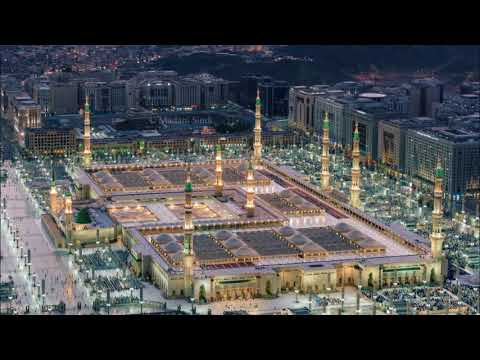 Listen: night 24 of Tarāwīḥ in the Prophet’s Mosque, 1410
9Sheikh Bandar Balīlah
الشيخ بندر بليلة
A son of Makkah who returned to lead prayer in its mosque. Sheikh Bandar’s recitation is calm and unhurried, with a warmth that makes long passages easy to follow even for listeners still learning Arabic. His Fajr recitations — often a whole theme of a sūrah in one prayer — are among the most shared recordings from the Ḥaram.
 Listen: the closing verses of Sūrat Ibrāhīm, Fajr
10Sheikh Yāsir al-Dawsarī
الشيخ ياسر الدوسري
A scholar as well as a reciter — he holds a doctorate in comparative fiqh and studied with Sheikh ʿAbdullāh ibn Jibrīn among others. His recitation is known for tadabbur: he lets the meaning lead, slowing, rising or pausing where the verse asks for it. For many younger Muslims, his is the voice that made them want to understand what they were hearing.
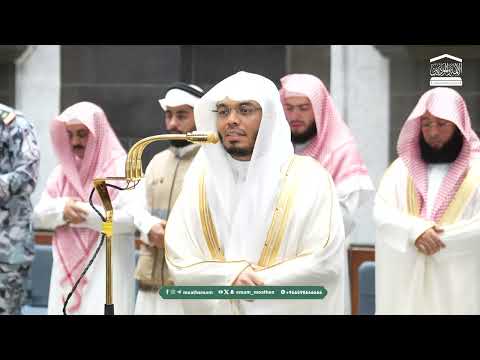 Listen: Sūrat al-Sajdah and al-Insān, Friday Fajr in Makkah
Listening is only half of it
Every one of these men began the same way: as a child sitting in front of a teacher, reading a line, being corrected, and reading it again. The beauty you hear is built on years of talaqqī — taking the Qur’an from the mouth of a teacher.
- Learning tajwīd? Use al-Ḥuṣarī’s or al-Minshāwī’s murattal as your model. They are slow and exact enough to copy.
- Memorising? Pick one reciter and stay with him, so the same melody carries the same verses every time.
- Teaching a child? Al-Minshāwī’s recording with children repeating after him was made for exactly this.
- Want to feel the meaning? Listen with a translation open beside you — and then start learning the Arabic.
The best reciter for you, in the end, is the one who gets you reciting.
Learn to recite the way they learned
Every reciter on this list sat in front of a teacher. Ours are native Arabic speakers from Egypt, Al-Azhar qualified, with ijāzah-certified reciters among them. One-to-one online lessons for children and adults, from $8 an hour, and the first lesson is free.
Book a free trial lesson Or read about our Qur’an and tajwīd, Arabic and Islamic studies courses.